The question, "Can you use nic salts in a sub-ohm tank?" sparks a lively debate among vaping enthusiasts. Nicotine salts offer a smooth vaping experience, often preferred by those seeking higher nicotine levels. However, sub-ohm tanks are designed for lower nicotine concentrations and produce large vapor clouds. This contrast raises concerns about throat hit and overall satisfaction.
When considering using nic salts in a sub-ohm tank, it's essential to reflect on personal preferences and vaping styles. The complexity of flavor interactions and nicotine delivery can vary significantly. Many vapers might find that the intense vapor from a sub-ohm setup can lead to an overwhelming throat hit when paired with high-nicotine salts.
Furthermore, there is limited research specifically on this combination. Many experienced vapers have shared their insights online, yet personal experiences can differ. Using nic salts in a sub-ohm tank may work for some but can be a challenging experience for others. Proper understanding and experimentation are critical to finding what truly enhances your vaping journey.
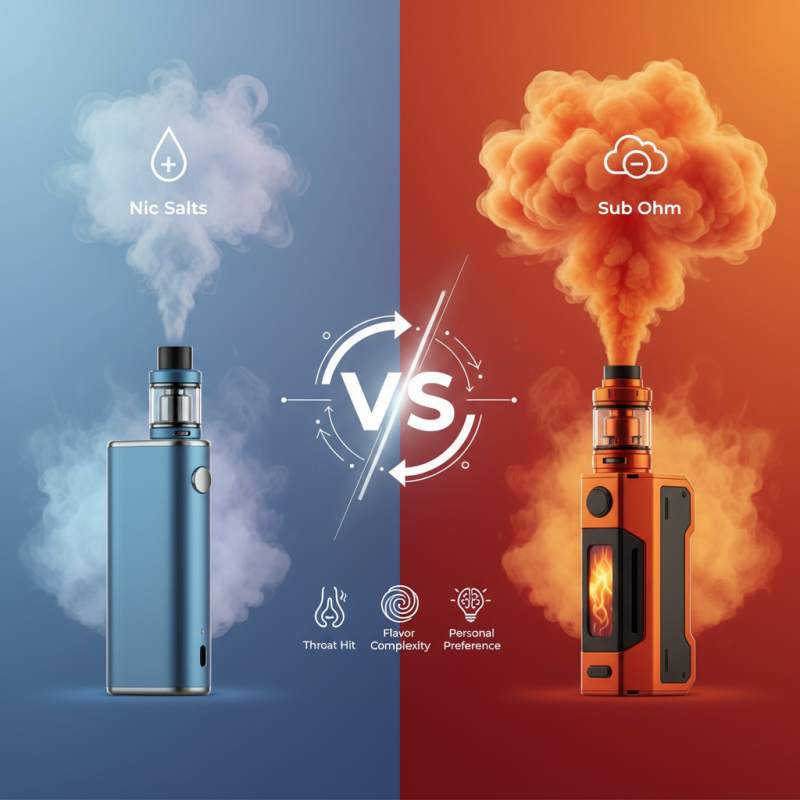
Nicotine salts, often referred to as nic salts, offer a different vaping experience compared to traditional freebase nicotine. Made from a combination of nicotine and organic acids, nic salts provide a smoother throat hit, even at higher nicotine concentrations. Reports indicate that around 60% of vapers prefer the smoothness and satisfaction that nic salts provide. This is partly due to their quicker absorption into the bloodstream, which can lead to a faster nicotine delivery and a more satisfying experience.
Using nic salts in a sub-ohm tank may not be advisable. Sub-ohm tanks are designed for lower nicotine levels and higher wattages. High nicotine levels in sub-ohm setups can lead to unpleasant throat hits. Research suggests that many users experience discomfort when inhaling high mg nic salts through low-ohm devices. This could lead to coughing or even nausea for some individuals.
Tips: Consider starting with lower nicotine concentrations when switching to a sub-ohm tank. Experimenting with resistance levels can help find a comfortable experience. Always listen to your body and adjust accordingly. It’s essential to remember that each vaper's experience is unique, and what works for one may not work for another.
This chart shows the preferred types of nicotine among various vaping devices. Pod systems and MTL tanks are more commonly associated with nicotine salts, while sub ohm tanks and drippers tend to utilize freebase nicotine. Understanding these preferences can guide users in selecting the right device and nicotine form for their vaping experience.
Sub ohm tanks have revolutionized the vaping experience. They use coils with a resistance below 1.0 ohms, allowing for larger vapor production. This design enhances flavor and provides a smoother throat hit. The concept behind sub ohm vaping rests on the principles of increased power and airflow. Higher wattage settings heat the coil faster, creating dense clouds.
Nicotine salts, on the other hand, have a unique formulation. They allow for higher nicotine levels without the harsh throat hit. Using nic salts in a sub ohm tank can create an interesting experience. However, it can also be quite overwhelming. The intense nicotine hit may not suit every vaper. Many find themselves coughing or feeling dizzy after a few puffs.
It’s essential to consider your vaping style. Not all users appreciate the combination of high nicotine and vast vapor production. Some may prefer a more controlled approach with traditional e-liquids. Finding the right balance is crucial for an enjoyable experience. Experimentation can lead to better outcomes, but caution is advised. Understanding how these components interact enriches the vaping journey.
When it comes to vaping, many enthusiasts debate the benefits of nicotine salts versus freebase nicotine. Nic salts deliver nicotine more efficiently. They offer a smoother throat hit, making them popular for new vapers. Freebase nicotine, on the other hand, tends to be harsh at higher concentrations. It stays a go-to for cloud chasers and those who prefer traditional flavors.
Using nic salts in a sub-ohm tank is often not recommended. Sub-ohm vaping usually requires higher wattage, which can burn the nic salts too quickly. This can lead to an unpleasant taste and an overwhelming throat hit. For those looking to switch, it's essential to consider the type of tank and coil used.
Tips for Vaping with Nic Salts:
Start with lower wattage settings to gauge your comfort level. Consider using pods specifically designed for nic salts. Monitor your vaping habits. If you feel dizzy or nauseous, it may indicate that you've had too much nicotine. Balancing your nicotine intake is crucial.
Using nicotine salts in sub-ohm tanks can enhance your vaping experience, but it comes with some important considerations. Nic salts are designed for lower wattage devices. When used in a sub-ohm tank, the high temperature can lead to a different throat hit and nicotine absorption. This might not suit everyone’s preferences. Some vapers may find the experience overwhelming.
Consider experimenting with lower concentrations of nicotine salts. A high concentration in a sub-ohm tank can be too harsh. Choose your VG/PG ratio wisely as well; a higher VG can provide smoother hits. Test different setups to find what works best for you.
Vaping with nic salts in a sub-ohm tank may produce more vapor, but it can also lead to quick nicotine overload. Pay attention to how you feel during and after vaping. If you experience discomfort, reassess your nicotine levels. Always keep in mind that your experience may vary. Listen to your body and adjust accordingly.
Using nic salts in sub ohm tanks can seem appealing for many vapers looking for a smoother throat hit. However, there are best practices one should follow. The higher nicotine concentration in nic salts may not pair well with low-resistance coils. These coils can produce large vapor clouds that may be overwhelming for new users.
Vaping Experience Researchers suggest that it’s best to use nic salts in devices designed for mouth-to-lung (MTL) styles, while sub ohm tanks are geared more toward direct-to-lung (DTL).
When using nic salts in a sub ohm tank, consider the nicotine levels. A common recommendation is to stay around 10-20 mg/ml for comfortable vaping. At higher levels, some users might experience increased throat irritation or dizziness. A report from the American Vaping Association notes that pairing high-nicotine liquids with powerful devices can result in an unsteady experience.
Wicking is another factor that affects performance. Ensure good wicking to avoid dry hits, which can happen more often with higher VG blends. Adjusting wattage can also impact the overall vaping experience. It requires careful experimentation to strike the right balance. Recognizing one’s limits with nicotine is crucial. Listening to your body's signals will lead to a more satisfying session.
: Sub ohm tanks use coils with a resistance below 1.0 ohms. They produce larger vapor clouds and enhance flavor.
Nicotine salts allow for higher nicotine levels with less harsh throat hits. They can create an intense vaping experience.
Yes, but it may be overwhelming. High wattage can lead to intense throat hits and quick nicotine absorption.
Staying around 10-20 mg/ml is common. Higher levels may cause throat irritation or dizziness for some users.
Pay attention to how you feel. If discomfort occurs, reassess your nicotine levels and adjust your setup.
Wicking is crucial. Good wicking prevents dry hits, especially with higher VG e-liquids. Poor wicking can ruin the experience.
No, not all users enjoy high nicotine and vapor production. It’s important to find a balance that suits your style.
Yes, experimenting is key. Trying different nicotine levels and VG/PG ratios can help find your ideal vaping experience.
DTL refers to a vaping style that delivers vapor straight to the lungs. It differs from mouth-to-lung (MTL) techniques.
Understand your limits, listen to your body, and adjust your vaping habits. Experimenting carefully can lead to better enjoyment.
The article titled "Can You Use Nic Salts in a Sub Ohm Tank for Better Vaping?" explores the compatibility of nicotine salts with sub-ohm tanks. It begins by detailing the composition of nicotine salts and how they differ from freebase nicotine. The mechanics of sub-ohm tanks are explained, highlighting their ability to produce large vapor clouds and enhance flavor. A comparison between nic salts and freebase nicotine reveals important differences in throat hit and absorption rates.
The article further evaluates the effects of using nic salts in sub-ohm tanks, noting that while it is technically possible, users should consider their nicotine tolerance and desired vaping experience. Best practices for incorporating nic salts into sub-ohm systems are discussed, encouraging vapers to adjust their settings appropriately to avoid potential throat discomfort. Overall, the article aims to guide readers in understanding whether they should ask, "Can you use nic salts in a sub-ohm tank?" and provides insights for making informed decisions.

Zeno Vape